




How to Talk to Your Child About a Disappointing Test Result
Your child hands you a test paper. The mark is lower than either of you expected.
Perhaps they studied all week. Perhaps you reminded them several times to revise. You may feel worried, frustrated or unsure what to say.
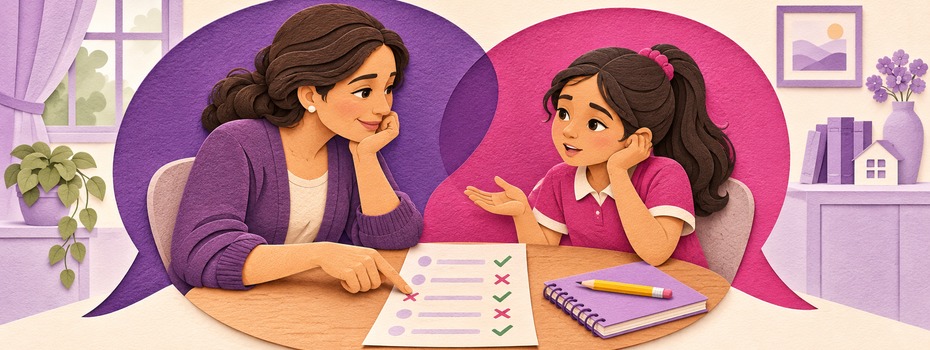
Before asking about the score, give yourself a moment to look at your child. They may already be disappointed. The first conversation can begin with a simple invitation.
“How do you feel about this result?”
Listen to their answer before opening the paper together.
Choose a Time When You Can Both Listen
A conversation at the school gate or during a rushed dinner may end before you understand what happened.
If either of you feels upset, arrange a specific time to return to it.
“We’ll look through the paper together after dinner. First, tell me how the test felt.”
You can acknowledge disappointment without immediately deciding what caused the result. “I can see you hoped for a higher mark” leaves space for your child to explain.
Look Beyond the Total Score
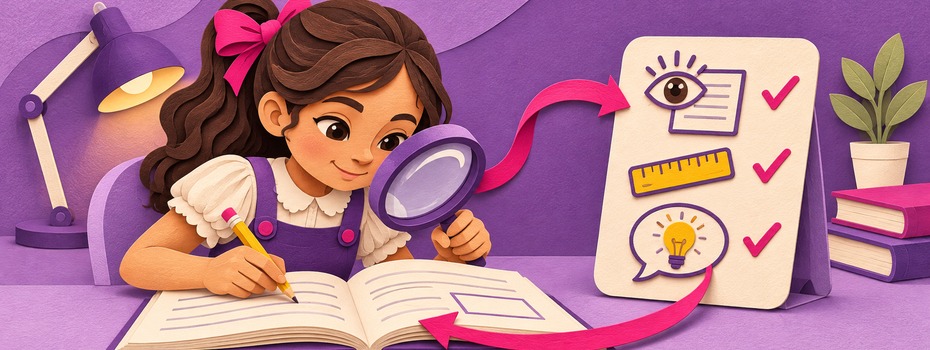
Once you have the paper, choose two or three questions to review. Ask your child to talk through what they tried.
A wrong answer can have several causes, and the written work gives you clues.
| What you notice | A question to explore |
|---|---|
| The method is correct, but the final calculation is wrong | “Where could you check this calculation?” |
| The answer addresses a different question | “What did you think the instruction was asking?” |
| Several questions from one topic are incorrect | “Which part of this topic still feels unclear?” |
| Questions near the end are blank | “What happened when you reached this section?” |
| An answer has been changed from correct to incorrect | “What made you change your mind?” |
Use these as starting points. Let your child explain before deciding which support would help.
Make the Conversation Specific
Consider this example.
A parent sees that their child scored 12 out of 20 in Maths. On closer inspection, the child answered the calculation questions correctly but lost most marks on word problems.
The parent asks, “Show me how you understood this question.”
The child explains the calculation they chose. Together, they notice that the child used every number in the question without identifying what needed to be found.
That gives them something concrete to practise. For the next few sessions, the child will underline the information they need and explain the question in their own words before calculating.
Agree on One Manageable Next Step
“Work harder next time” gives a child little direction. Choose an action connected to something you observed in the paper.
For example, your child might agree to:
Practise three questions from one difficult topic.
Write units beside every measurement during practice.
Explain a question aloud before attempting it.
Take one confusing question to their teacher or tutor.
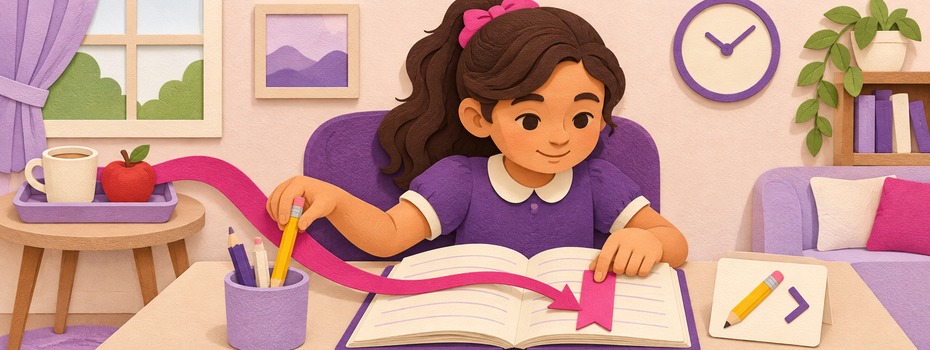
Decide when they will do it and when you will look at their work again. Keep the first target small enough to complete alongside normal schoolwork.
Check What They Can Do After Reviewing
Reading a correction is one step. Trying a similar question helps you see whether the explanation made sense.
After working through an error, close the corrected example and offer another question using the same skill. Ask your child to explain their choices.
If they still struggle, note the point where they become stuck. That is useful information to share with their teacher or tutor.
Include Something They Did Successfully
Look for a specific piece of work your child can build on.
“You set out the equation clearly.”
“You showed your working, so we could find the calculation error.”
“You answered the first reading question using evidence from the passage.”
Discussing successful work helps you identify methods worth repeating, alongside the skills that need attention.
When Should You Speak to the Teacher or Tutor?
Contact them when you need help understanding the marking, when the same difficulty appears across several assessments, or when your child cannot explain the corrected work.
Bring a few examples and ask a focused question.
“These three questions seem to involve the same skill. What should we practise first?”
Agree on what progress could look like in the next piece of work. That may be choosing a suitable method, completing more questions independently or explaining an answer more clearly.
Frequently Asked Questions
What if my child says they studied but still scored poorly?
Ask them to show you how they revised. Look at their notes, practice questions and corrected work together. Then discuss whether their preparation gave them practice with the kinds of questions in the test.
What if my child refuses to discuss the paper?
Pause and agree on another time. When you return to it, begin with one question or invite them to choose a part they are willing to review.
Should we redo the entire test?
Start with a small selection that reveals the main difficulty. Use similar questions afterwards to check understanding, and ask the teacher or tutor whether a fuller review would help.
If your child needs support turning corrections into understanding, bring a recent test paper to a TheTuitionE demo lesson and discuss the next learning goal.