Services Available in UAE, KSA, Qatar, India and Bahrain.
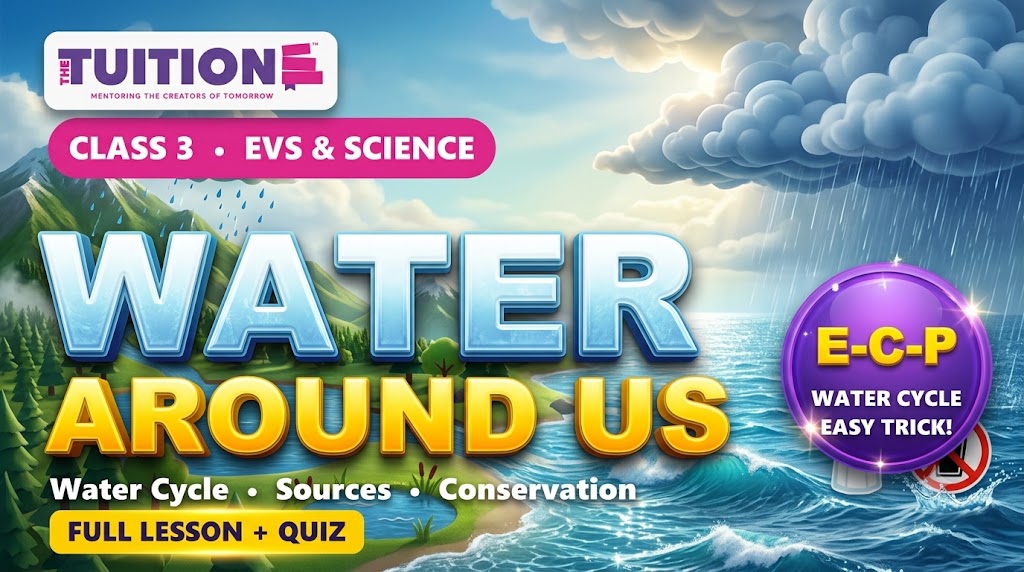
Water Around Us – Water Cycle, Sources and Conservation

CBSE Grade II Environmental sciences
6 views
Through this video, students will develop a clear understanding of the importance of water in our daily lives and its role in supporting all living things, including humans, plants and animals. They will learn about different sources of water and understand the difference between surface water, such as rivers, lakes and ponds, and groundwater, which is obtained through wells and tube wells. The video introduces the water cycle and explains its three main stages—evaporation, condensation and precipitation—in a simple and engaging manner, helping students understand how water continuously moves between the Earth and the atmosphere. Students will also learn why drinking clean and safe water is important, how polluted water can affect our health and why water must be protected from contamination. Furthermore, they will understand the importance of conserving water through simple everyday habits, such as turning off taps when not in use, avoiding unnecessary wastage and reusing water wherever possible. The concept of rainwater harvesting will introduce them to ways of collecting and storing rainwater for future use. By the end of the video, students should be able to identify different water sources, describe the basic water cycle, recognise the importance of clean drinking water and demonstrate awareness of their responsibility towards saving and protecting this precious natural resource.

Frequently Asked Questions

Water is essential for humans, animals and plants. We need it for drinking, cooking, growing food and many other daily activities. Plants need water to grow, and animals need it to survive.

The two main types are: - Surface water – Rivers, lakes, ponds and oceans. - Groundwater – Water found beneath the Earth's surface, which we can obtain through wells and tube wells.

The water cycle is the continuous movement of water between the Earth and the atmosphere. It includes evaporation, condensation and precipitation.

Dirty water may contain harmful germs and impurities that can make us sick. Boiling or properly filtering water helps make it safer to drink.

Rainwater harvesting is the process of collecting and storing rainwater for future use. It helps save water and can replenish groundwater.

Practice MCQs

Question 1 of 5

Resource Info

Water Around Us – Water Cycle, Sources and Conservation

Water is essential for all living things. In this lesson, students will explore different sources of water, understand the water cycle, learn about evaporation, condensation and precipitation, and discover why clean drinking water is important. They will also understand water pollution and learn simple ways to conserve water, including rainwater harvesting.

Matched Teachers

Learn this topic with expert teachers

Based on this resource curriculum, grade and subject, these teachers can help students with concept clarity, doubt solving, practice questions and exam preparation.

Aanya Sharma Best Match Online Classes

Aanya Sharma

B.El.Ed Graduate, CTET Qualified | Skilled in Child Development, Activity-Based Learning & Teaching (Grades 1–5)
4.8 | 2+ Years
A passionate and dedicated graduate with a Bachelor of Elementary Education (B.El.Ed), a four-year integrated degre...
CBSE Grade II Environmental sciences
Find the
right teacher
for you
👩‍💼

Still confused about choosing a teacher?

Talk to our academic counsellor. We will help you choose the right teacher based on curriculum, grade, subject and learning goal.

Need personal guidance for this topic?

Learn with expert teachers from TheTuitionE. Get one-to-one support, concept clarity, homework help and exam-focused preparation.

Book Free Demo