Services Available in UAE, KSA, Qatar, India and Bahrain.
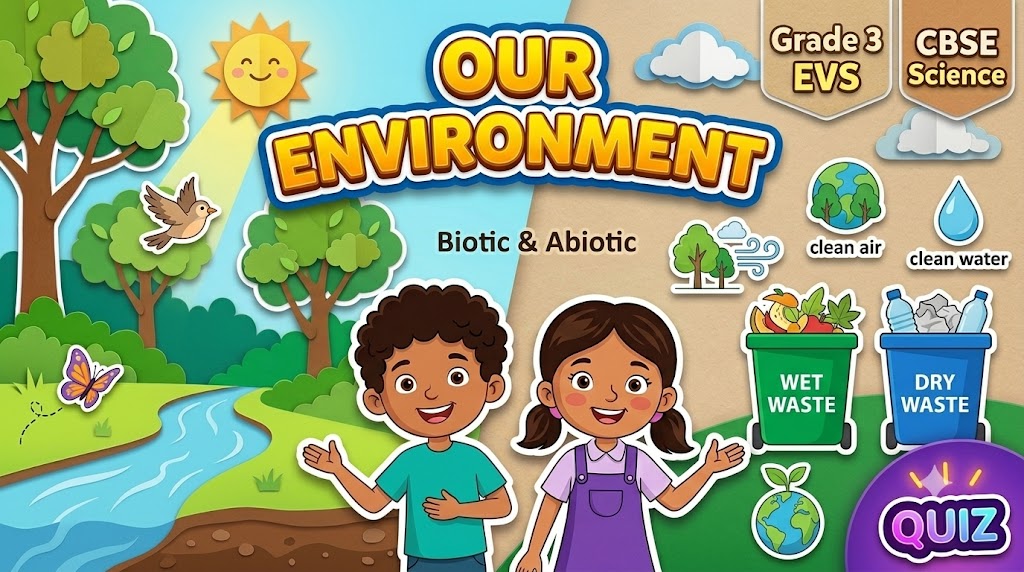
Our Environment – Grade 3 EVS & Science

CBSE Grade III Environmental sciences
5 views
Through this video, students will develop an understanding of the environment and the different components that make up the world around them. They will learn to distinguish between biotic components, such as plants, animals and humans, and abiotic components, such as air, water, sunlight and soil. The lesson will introduce different forms of pollution, including air, water, soil and noise pollution, helping students recognise their common causes and harmful effects on the environment. Students will also understand the difference between biodegradable and non-biodegradable waste and learn why separating wet and dry waste is important for proper disposal, recycling and composting. The video will encourage them to develop responsible environmental habits, such as reducing plastic use, planting trees, avoiding littering and keeping their surroundings clean. By the end of the lesson, students should be able to identify environmental components, recognise different types of pollution, classify common waste materials and suggest simple ways to protect nature and maintain a clean and healthy environment.

Frequently Asked Questions

The environment includes everything around us, such as air, water, soil, plants, animals and human beings. It provides the conditions necessary for living things to survive.

Biotic components are the living things in our environment, such as plants, animals and humans. Abiotic components are the non-living things, such as air, water, sunlight and soil.

The main types of pollution discussed in the lesson are: - Air pollution – Caused by smoke from vehicles and factories. - Water pollution – Caused by waste and harmful substances entering water bodies. - Soil pollution – Caused by dumping garbage and harmful chemicals on land. - Noise pollution – Caused by loud horns, loudspeakers and machinery.

Biodegradable waste breaks down naturally, such as fruit peels, vegetable scraps and dry leaves. Non-biodegradable waste does not break down easily and may remain in the environment for a long time, such as plastic bags and glass.

Waste segregation means separating different types of waste, such as wet and dry waste. It helps in proper waste disposal, recycling, composting and reducing environmental pollution.

Practice MCQs

Question 1 of 4

Resource Info

Our Environment – Grade 3 EVS & Science

This lesson introduces students to the environment and its living and non-living components. Students will learn about biotic and abiotic elements, different types of pollution, and the difference between biodegradable and non-biodegradable waste. They will also understand the importance of waste segregation and discover simple eco-friendly habits to reduce pollution, keep their surroundings clean and protect our planet.

Matched Teachers

Learn this topic with expert teachers

Based on this resource curriculum, grade and subject, these teachers can help students with concept clarity, doubt solving, practice questions and exam preparation.

Aanya Sharma Best Match Online Classes

Aanya Sharma

B.El.Ed Graduate, CTET Qualified | Skilled in Child Development, Activity-Based Learning & Teaching (Grades 1–5)
4.8 | 2+ Years
A passionate and dedicated graduate with a Bachelor of Elementary Education (B.El.Ed), a four-year integrated degre...
CBSE Grade III Environmental sciences
Find the
right teacher
for you
👩‍💼

Still confused about choosing a teacher?

Talk to our academic counsellor. We will help you choose the right teacher based on curriculum, grade, subject and learning goal.

Need personal guidance for this topic?

Learn with expert teachers from TheTuitionE. Get one-to-one support, concept clarity, homework help and exam-focused preparation.

Book Free Demo